SEMICON India 2026: India’s Semiconductor Push Enters a New Phase
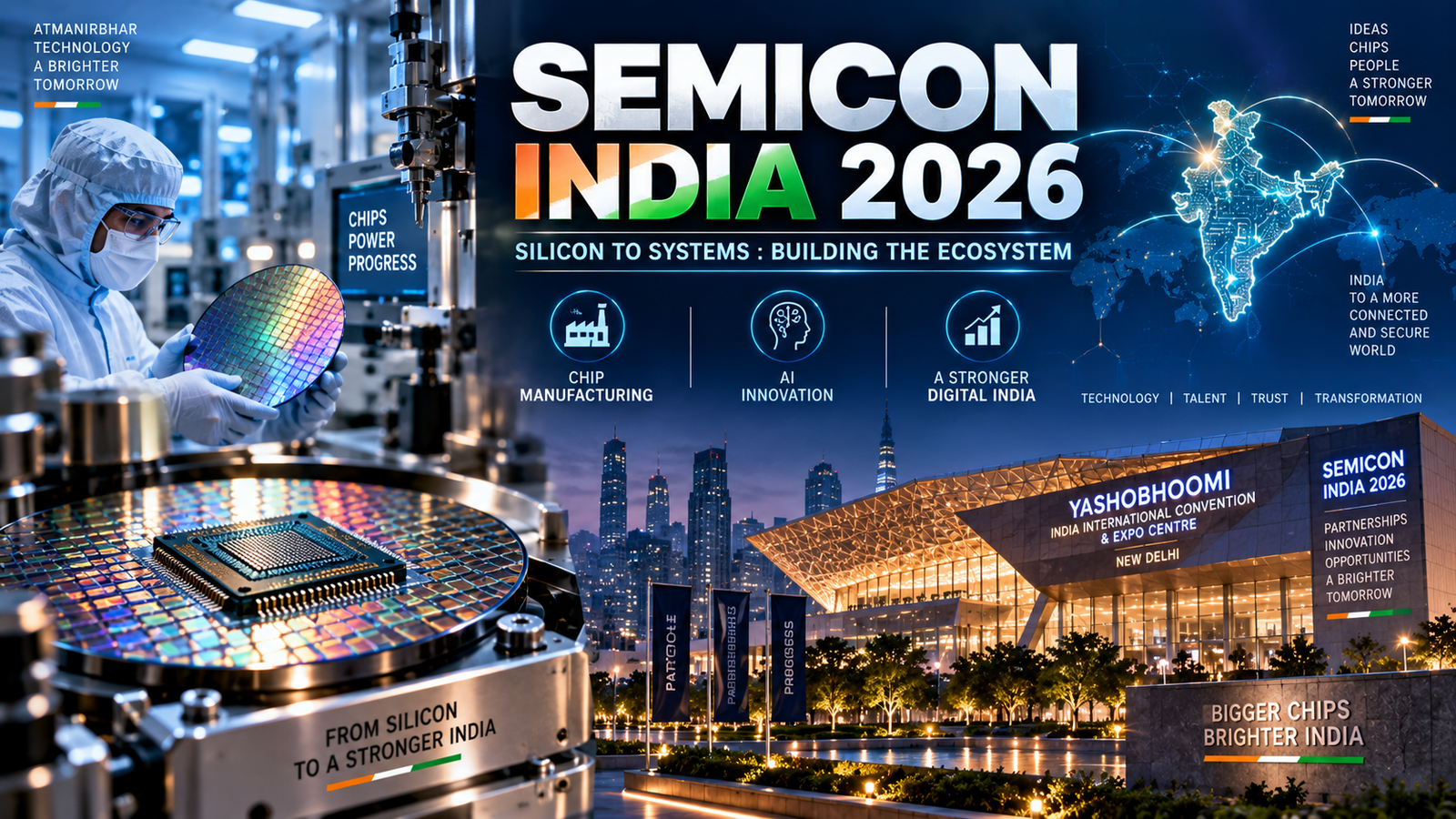
SEMICON India 2026 Begins in New Delhi: India Pushes Towards a Global Semiconductor Hub
Date: 17 September 2026
Category: Science & Technology | Economy | Current Affairs
Exam Relevance: UPSC, SSC, Banking, CDS, CAPF, State PSC, Defence Exams
What Happened?
The fifth edition of SEMICON India 2026 begins today, September 17, at Yashobhoomi (India International Convention & Expo Centre), New Delhi.
The three-day event, being held from September 17–19, is being organised jointly by the India Semiconductor Mission (ISM), Ministry of Electronics and Information Technology (MeitY), and SEMI, the global industry association for the semiconductor and electronics ecosystem.
The theme of SEMICON India 2026 is:
“Silicon to Systems: Building the Ecosystem”
Prime Minister Narendra Modi is scheduled to inaugurate the event on September 17. The event brings together semiconductor companies, policymakers, investors, researchers, startups, academia and students.
Why Is SEMICON India 2026 Important?
Semiconductors are the basic building blocks of modern technology. They are essential for:
- Smartphones and computers
- Artificial Intelligence (AI)
- 5G and telecommunications
- Electric vehicles
- Defence systems
- Satellites and space technology
- Industrial automation
- Data centres
- Internet of Things (IoT)
For India, developing a domestic semiconductor ecosystem is also linked to economic resilience, technological capability and supply-chain security.
The government says India’s semiconductor journey is moving from project approvals towards actual manufacturing and ecosystem development. Under the Semicon India Programme, 12 semiconductor projects have been approved across six states, with investment commitments exceeding ₹1.64 lakh crore. Three of these projects have already commenced commercial production.
SEMICON India 2026: Key Highlights
According to the Ministry of Electronics and Information Technology:
- Dates: 17–19 September 2026
- Venue: Yashobhoomi, New Delhi
- Edition: 5th
- Theme: Silicon to Systems: Building the Ecosystem
- Exhibitors: 600+
- International companies: 300+
- Countries represented: 40+
- Speakers: 150+
- Country pavilions: 6
- State pavilions: 12
- Exhibition area: Around 15,000 sq. metres
- Organisers: India Semiconductor Mission, MeitY and SEMI
A major attraction is the “Sand to Silicon to Systems” Value Chain Experience, designed to demonstrate the semiconductor journey from materials and manufacturing through packaging, design, electronics and systems.
From Semicon 1.0 to Semicon 2.0
India launched the Semicon India Programme in 2021 with an outlay of ₹76,000 crore.
The programme aimed to develop capabilities across the semiconductor value chain, including:
Design → Fabrication → Packaging → Testing → Equipment → Materials → Talent
The next phase, Semicon 2.0, has been approved with a much larger outlay of ₹1,27,500 crore and focuses on further strengthening India’s semiconductor ecosystem.
Its broader objectives include semiconductor manufacturing, equipment and materials, advanced packaging, research and development, chip design and talent development.
India’s Semiconductor Demand
India is already one of the world’s major electronics markets, but a large part of the semiconductor requirement has historically depended on global supply chains.
Government estimates cited for SEMICON India 2026 put India’s semiconductor demand at around US$50 billion currently, with the potential to reach approximately US$103 billion by 2030.
Globally, the semiconductor market was valued at around US$796 billion in 2025 and is projected to exceed US$2 trillion by 2030.
This makes semiconductor manufacturing strategically important not only for electronics but also for India’s future AI, defence, automotive and digital infrastructure sectors.
Why Semiconductor Supply Chains Matter
The semiconductor industry is highly interconnected.
A single chip can involve:
Raw materials → Wafer production → Chip design → Fabrication → Packaging → Testing → Electronics manufacturing → Final product
Different stages may take place in different countries.
This creates vulnerabilities when geopolitical tensions, natural disasters, trade restrictions or supply-chain disruptions affect semiconductor production.
India’s semiconductor strategy therefore aims to develop capabilities across multiple stages instead of focusing only on chip fabrication.
India’s Semiconductor Ecosystem
The government has approved 12 semiconductor projects under the India Semiconductor Mission.
These include:
- Semiconductor fabrication
- Compound semiconductor fabs
- Advanced packaging
- Semiconductor testing
- Electronics manufacturing ecosystem
The projects are spread across six states and represent investment commitments of more than ₹1.64 lakh crore.
India is also investing in semiconductor design capabilities. The government’s ChipIN initiative has provided access to chip-design facilities and tools for engineers, academic institutions and startups, helping reduce the entry barrier for semiconductor design.
Semiconductor + AI: Why the Connection Matters
The rise of Artificial Intelligence has dramatically increased demand for advanced computing hardware.
AI systems require powerful processors and accelerators, while data centres require large numbers of high-performance chips.
This means that India’s semiconductor strategy is closely connected with its ambitions in:
- Artificial Intelligence
- Quantum computing
- Data centres
- Cloud computing
- 5G/6G
- Autonomous systems
- Defence technology
A semiconductor ecosystem can therefore become an important foundation for India’s broader emerging-technology ambitions.
India’s Strategic Objective
India’s semiconductor push is not limited to producing chips.
The larger objective is to develop an ecosystem covering:
Design + Manufacturing + Packaging + Testing + Equipment + Materials + Research + Skilled Workforce
This is reflected in the theme of SEMICON India 2026:
“Silicon to Systems: Building the Ecosystem”
The event therefore provides an important platform for understanding India’s transition from electronics assembly and chip-design capabilities towards a more integrated semiconductor ecosystem.
Exam Relevance
For UPSC
Important areas include:
- Semiconductor ecosystem
- India Semiconductor Mission
- Semiconductor supply-chain resilience
- Technology sovereignty
- AI and semiconductor relationship
- Critical technologies
- India’s manufacturing strategy
For SSC & State PSC
Remember:
- SEMICON India 2026 → 5th edition
- Venue → Yashobhoomi, New Delhi
- Dates → 17–19 September 2026
- Theme → Silicon to Systems: Building the Ecosystem
- Organisers → ISM, MeitY and SEMI
For Defence Exams
Semiconductors are increasingly important for:
- Radar systems
- Communication systems
- Electronic warfare
- Drones
- Missiles
- Satellites
- AI-enabled military systems
Thus, semiconductor capability is also relevant to India’s defence-tech ecosystem.
Important Facts to Remember
| Topic | Key Fact |
|---|---|
| Event | SEMICON India 2026 |
| Edition | 5th |
| Dates | 17–19 September 2026 |
| Venue | Yashobhoomi, New Delhi |
| Theme | Silicon to Systems: Building the Ecosystem |
| Organisers | ISM, MeitY & SEMI |
| Exhibitors | 600+ |
| International Companies | 300+ |
| Countries | 40+ |
| Approved Semiconductor Projects | 12 |
| Project Investment Commitments | ₹1.64 lakh crore+ |
| Semicon India Programme | ₹76,000 crore |
| Semicon 2.0 | ₹1,27,500 crore |
The above figures are based primarily on official government releases and background material.
MCQs for Competitive Exams
Q1. What is the theme of SEMICON India 2026?
A. Digital India for a New Generation
B. Silicon to Systems: Building the Ecosystem
C. Chip India: Make in India
D. Semiconductor India: Technology for All
Answer: B
Q2. SEMICON India 2026 is being held at which location?
A. Bharat Mandapam, New Delhi
B. Pragati Maidan, New Delhi
C. Yashobhoomi, New Delhi
D. HITEX, Hyderabad
Answer: C
Q3. Which organisations jointly organise SEMICON India 2026?
A. ISRO, DRDO and IIT Delhi
B. ISM, MeitY and SEMI
C. NITI Aayog, RBI and MeitY
D. DPIIT, DRDO and BIS
Answer: B
Q4. What was the original outlay of the Semicon India Programme launched in 2021?
A. ₹25,000 crore
B. ₹50,000 crore
C. ₹76,000 crore
D. ₹1,27,500 crore
Answer: C
Q5. Under the India Semiconductor Mission, how many semiconductor projects had been approved according to the latest government information?
A. 6
B. 8
C. 10
D. 12
Answer: D
Conclusion
SEMICON India 2026 represents an important stage in India’s semiconductor journey. The focus is increasingly shifting from simply attracting individual projects towards creating a complete ecosystem covering chip design, manufacturing, packaging, testing, equipment, materials, research and skilled talent.
For competitive-exam aspirants, the topic connects Science & Technology, Economy, Industry, National Security, Artificial Intelligence and International Supply Chains—making it an important current-affairs development to remember.
One-line revision:
SEMICON India 2026 — 5th edition — 17–19 September — Yashobhoomi, New Delhi — Theme: “Silicon to Systems: Building the Ecosystem.”