
RBI Hikes Repo Rate to 5.5% in October 2026: First Increase Since February 2023
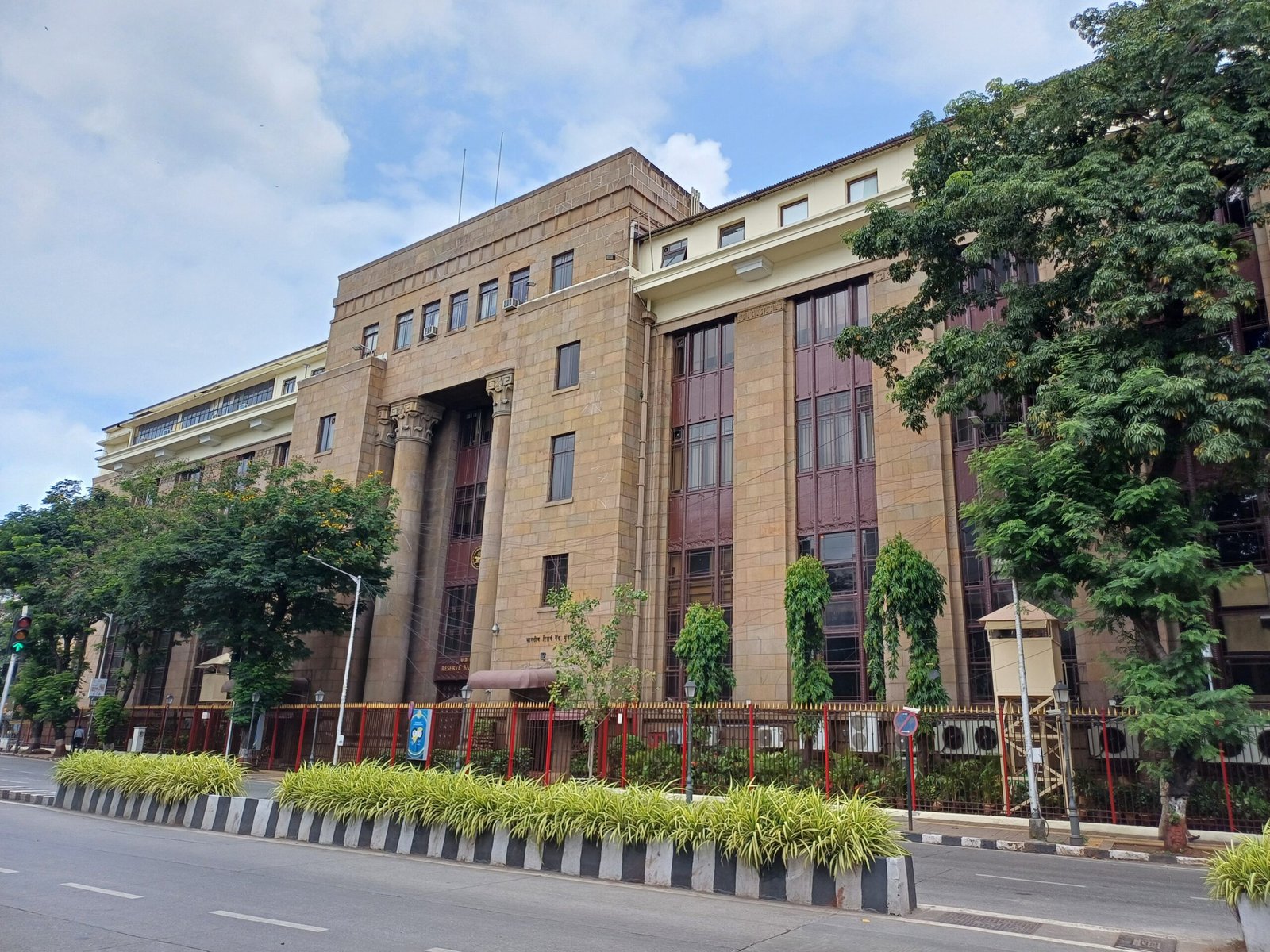
The Reserve Bank of India (RBI) has raised its key lending rate for the first time in more than three years. On 7 October 2026, the RBI’s six-member Monetary Policy Committee (MPC), led by Governor Sanjay Malhotra, unanimously decided to increase the repo rate by 25 basis points to 5.50%. The central bank also shifted its policy stance from neutral to “calibrated tightening”, signalling a hawkish turn in response to rising inflation risks. This is one of the most exam-relevant economic developments of the year, with direct implications for banking, inflation, and growth — topics that regularly appear in UPSC, SSC, Banking, and State PSC examinations.
What happened
After its three-day meeting, the MPC announced on Wednesday, 7 October 2026, that the repo rate would move from 5.25% to 5.50% — a 25-basis-point hike. The decision to raise the rate was taken unanimously by all six MPC members, while the change in stance to “calibrated tightening” was approved by a 4–2 majority. This is the RBI’s first repo rate hike since February 2023, ending a long period without an increase.
Alongside the rate decision, the RBI revised its macroeconomic projections for FY2026–27. Real GDP growth for the year is now forecast at 7.1%, up by 40 basis points from the earlier 6.7%, reflecting the economy’s strong momentum — GDP grew 7.8% in the April–June quarter of FY27. CPI inflation for FY27 was revised marginally upward to 5.2% from 5.1%, driven by rising prices of food, fuel, and fertilisers. Consequent to the repo rate change, the Standing Deposit Facility (SDF) rate stands at 5.25%, while the Marginal Standing Facility (MSF) rate and the bank rate have moved up to 5.75%.
Governor Sanjay Malhotra made it clear that further rate cuts are off the table in the near term — future policy action could only mean another hike or a pause, depending on how growth and inflation evolve. The next meeting of the MPC is scheduled for 2–4 December 2026.
Context and background
The repo rate is the rate at which the RBI lends money to commercial banks, and it is the most important tool of monetary policy in India. When the RBI raises the repo rate, borrowing becomes costlier for banks, which typically pass on higher rates to home, car, and personal loan customers. This cools down demand in the economy and helps bring inflation under control.
The MPC was set up under the RBI Act, 1934 (as amended by the Finance Act, 2016) to decide on the repo rate. It has six members — three RBI officials, including the Governor as chairperson, and three external members appointed by the government. The MPC is mandated to maintain CPI inflation at 4% with a band of +/- 2 percentage points, i.e., between 2% and 6%.
The RBI’s decision comes against a backdrop of mounting price pressures. Headline CPI inflation rose to 4.8% year-on-year in August 2026, up from 4.5% in July. Governor Malhotra flagged elevated global crude oil prices, higher food and fertiliser costs, uncertainty around rainfall, and persistent geopolitical tensions — including an elusive resolution of the West Asia conflict — as key risks to the inflation outlook.
The policy stance matters too. A “neutral” stance means the central bank can move in either direction depending on data, while “calibrated tightening” signals that the RBI is leaning towards withdrawing monetary accommodation gradually to keep inflation in check.
Important facts and figures
- Repo rate: raised 25 bps to 5.50% (from 5.25%) on 7 October 2026
- First rate hike since February 2023; rate decision unanimous; stance change passed 4–2
- Policy stance: changed from neutral to calibrated tightening
- FY27 real GDP growth forecast: raised from 6.7% to 7.1%
- FY27 CPI inflation forecast: raised from 5.1% to 5.2%
- Q1 FY27 GDP growth: 7.8%; CPI inflation in August 2026: 4.8%
- SDF rate: 5.25%; MSF rate and bank rate: 5.75%
- RBI Governor: Sanjay Malhotra; MPC has six members
- Next MPC meeting: 2–4 December 2026
In the same announcement, the RBI introduced customer-friendly financial reforms: it will enable interoperability among NBFC-Account Aggregators, letting customers access and share their financial data through any account aggregator of their choice, and it will facilitate SEBI-regulated depositories to include bank deposit information in the consolidated account statement (CAS) of demat account holders.
Why this news matters
This decision marks a decisive shift in India’s monetary policy cycle. After holding rates steady through most of 2026, the RBI has chosen to act pre-emptively against inflation even while the economy is growing strongly at above 7%. For citizens, the hike means home loans, car loans, and personal loans are likely to become more expensive as banks revise their lending rates. For the economy, it shows the RBI’s resolve to protect purchasing power and keep inflation within its 4% (+/- 2%) mandate, prioritising price stability over cheap credit.
The Governor’s comment that the rupee will be allowed to find its “correct value” with orderly movement also signalled the RBI’s stance on exchange-rate management amid global volatility.
Exam relevance and key takeaways
This topic is high-yield for competitive exams. For Prelims, memorise the numbers: repo rate 5.50%, SDF 5.25%, MSF and bank rate 5.75%, FY27 GDP forecast 7.1%, FY27 inflation projection 5.2%, and the new stance “calibrated tightening”. Banking exams frequently ask about the difference between repo rate, reverse repo rate, SDF, MSF, and CRR — this news is a natural hook for those questions. For Mains, the decision illustrates the classic growth–inflation trade-off in monetary policy and the RBI’s inflation-targeting framework (4% CPI with a 2–6% band). Also note the MPC’s composition (6 members, Governor as chair) and the 4–2 vote on the stance change, since questions on MPC decision-making mechanics are common in UPSC.
Practice MCQs
Q1. What is the repo rate after the RBI’s October 2026 Monetary Policy Committee decision?
A) 5.25%
B) 5.50%
C) 5.75%
D) 6.00%
Answer: B) 5.50%
Q2. What is the RBI’s new monetary policy stance announced on 7 October 2026?
A) Neutral
B) Accommodative
C) Calibrated tightening
D) Restrictive easing
Answer: C) Calibrated tightening
Q3. What is the RBI’s revised real GDP growth forecast for FY2026–27?
A) 6.7%
B) 6.9%
C) 7.1%
D) 7.8%
Answer: C) 7.1%
Q4. What is the RBI’s CPI inflation projection for FY2026–27 after the October 2026 MPC meeting?
A) 4.8%
B) 5.0%
C) 5.1%
D) 5.2%
Answer: D) 5.2%
Q5. When is the next meeting of the RBI’s Monetary Policy Committee scheduled?
A) 4–6 November 2026
B) 2–4 December 2026
C) 6–8 January 2027
D) 3–5 February 2027
Answer: B) 2–4 December 2026